Yes. Number plate reading cameras on Spain’s roads can tell whether a passing vehicle has its ITV (the compulsory roadworthiness test) in date and whether its compulsory insurance is in force. The camera photographs the number plate, software reads it, and the plate is looked up in the records of the Dirección General de Tráfico (DGT), Spain’s national traffic authority. Driving with an expired ITV carries a fine of €200, and a vehicle without compulsory insurance carries a fine of €601 to €3,005.
Living in Spain Licence and road rules
Cameras In Place On Spain's Roads That Can Detect A Valid ITV Or Insurance
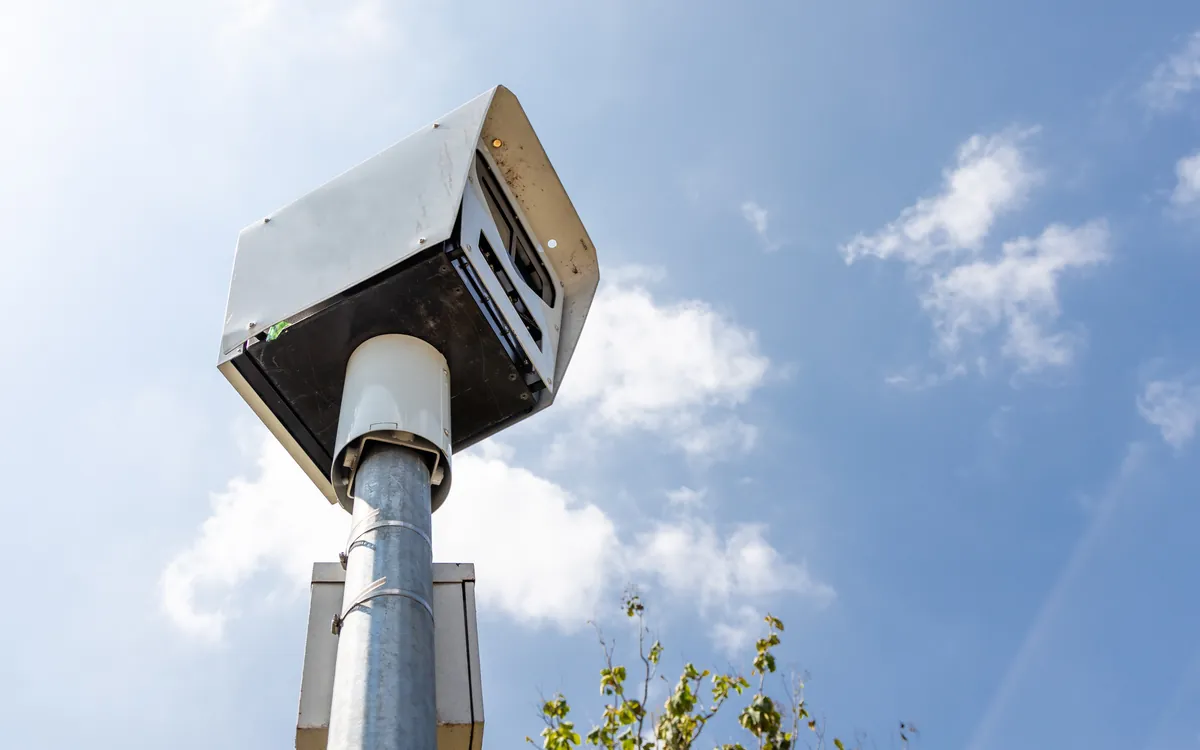
This guide explains how the check works, what the DGT itself has published about it, and what the law says about the two fines. It was checked against the traffic law, the motor insurance law and the DGT’s own publications in November 2026.
How The Cameras Check A Number Plate
The DGT calls these devices number plate readers (lectores de matrícula). In a report dated December 2024 it describes them as cameras with software that photograph the plate of each vehicle passing a point on the road and turn it into text automatically. For every plate read in that exercise, the DGT’s systems returned two things: the state of the ITV (in force, expired, unfavourable or not found) and the state of the compulsory insurance (in force, expired or not found).
No paper is involved, because both facts are already on record. ITV results are held in the DGT’s vehicle register. For insurance, the law obliges every insurer to send details of its motor policies to the Consorcio de Compensación de Seguros, the public body that keeps the register of insured vehicles known as FIVA. Our guide to car insurance documents in Spain covers what you need to keep in the car.
These readers are not the same thing as speed cameras, and a speed camera warning app tells you nothing about them. That subject has its own guide: speed camera apps and radar detectors in Spain.
What The DGT Has Published
- January 2020: the DGT announced that 30 number plate readers would check whether vehicles on the road had their ITV in date during a week-long campaign, and that any vehicle found without one would be reported for the offence.
- September 2024: over five days, readers at between one and three points in each province, on motorways and on ordinary roads, checked passing vehicles for both ITV and compulsory insurance. Of almost 2.2 million different vehicles read, 94.7% had their ITV in date and 97.7% had insurance in force. The DGT published the results in December 2024.
- October 2025: the DGT’s magazine reported 232 cameras with artificial intelligence across the country. They are used for offences such as holding a mobile phone or not wearing a seat belt, and the magazine says they can also tell whether a vehicle’s ITV has expired by checking the plate against the database. The images are reviewed automatically and then by trained staff before a fine is issued.
The DGT does not publish one up-to-date figure for the number of cameras that check ITV and insurance, so we do not give one. Cameras are also not the only check: the DGT’s magazine explains that Guardia Civil traffic officers have access to the vehicle records in real time and check insurance whenever they stop a driver.
Road accidents are normally excluded
Pick up your Sanitas quote
Most health policies will not treat you if you are hurt on the road or at work. Top Quantum and Professional plans include it free.
Your saved quote is ready whenever you are. Compare plans and finish in minutes.
- Free on Top Quantum
- Free on Professional plans
The Fine For Driving Without A Valid ITV
Driving with an expired ITV is a serious offence under Spain’s traffic law, with a fixed fine of €200. The same €200 applies if you keep using a vehicle after an unfavourable result, and driving one that has had a negative result is a very serious offence with a fine of €500.
When the test is due, what it costs and what each result means are in our guide to the ITV test in Spain. A traffic fine paid within 20 calendar days is normally halved: see paying traffic fines in Spain.
The Fine For Having No Compulsory Insurance
Every motor vehicle based in Spain must have at least compulsory third party insurance, and an uninsured vehicle is not allowed on the road. The motor insurance law sets the fine at €601 to €3,005. The amount depends on whether the vehicle was being driven, the kind of vehicle, the use it is put to, the harm caused, how long it has been uninsured and whether it has happened before. As a guide, the DGT’s magazine gave these figures for a car in September 2021: €800 if it is parked on the public road and €1,500 if it is being driven.
A vehicle kept on the public road must be insured even if it is never driven. The traffic law also allows officers to immobilise a vehicle that has no compulsory insurance, and the insurance law provides for it to be held in a pound or sealed, at the owner’s expense, for one month, for three months if it happens again, and for a year if the seal or deposit is broken. To get the vehicle back, the owner has to show that it is now insured and pay the costs.
How To Check Your Own Vehicle
You can see what the DGT holds on your vehicle, including the date the ITV expires and the insurer and start date of the current policy, in the private area of the DGT’s online office (sede electrónica), under miDGT. It is worth a look after changing insurer or buying a second-hand car.
If a fine arrives and you believe it is wrong, you normally have 20 calendar days from the notice to object. The steps are in our guide on how to appeal a traffic fine in Spain.
Sources
DGT: report on ITV and compulsory insurance compliance (December 2024, in Spanish)
DGT: 30 number plate readers to check the ITV (January 2020, in Spanish)
BOE: traffic law, articles 76, 77, 80 and 104 (in Spanish)
BOE: motor liability and insurance law, articles 2 and 3 (in Spanish)
More in Driving licences and road rules 36 guides and 1 article
 10 Spanish Traffic Laws You May Not Be Aware Of
 Loud Music In Your Car In Spain: What The Fine Really Is
 Drivers In Spain Warned That Carrying These Things On The Back Seat Could End With 200 Euro Fine
 Disabled Parking Badges In Spain
 The Three Documents You Must Carry In Your Car To Avoid A Fine Of Up To 100 Euros
Read next



Reviewed by Sean Guy, authorised Sanitas agent (agent code 22395) and DGSFP-registered insurance mediator (C0320X5769518Z), Marbella.
Written by the HealthPlan Spain team: English-speaking Sanitas health insurance specialists, helping expats in Spain get the right cover since 2011. Authorised and regulated by the DGSFP.