It depends on the kind of residency you hold. With long-term residency you lose it after 12 months in a row outside the European Union. British residents covered by the Withdrawal Agreement can be away for up to six months a year while their residence is temporary, and lose permanent residence only after more than five years in a row away. For other temporary permits the current regulation sets no fixed limit on absences, but you must keep meeting the conditions of your permit: the non-lucrative visa, for example, is renewed only if you have lived in Spain for more than 183 days in the year.
Visas & Residency Residency and NIE
How Long Can You Be Outside Spain Without Losing Your Residency?

If you are legally resident in Spain, you may wish to leave the country from time to time, whether for short visits or longer stays elsewhere. However, it is important to understand that your time away can affect your residency status.
How long can you leave Spain without losing your residency status? The answer depends on which residence document you hold: the green EU registration certificate, a British resident’s TIE card issued under the Brexit Withdrawal Agreement, or a TIE card issued under Spain’s general immigration rules. It also depends on whether your residence is still temporary or has become permanent (long-term). The rules below were checked against the law in force in November 2026.
Temporary or Permanent Resident
Temporary residency means you have lived in Spain for less than five years. Even if you intend to stay permanently, you are considered temporary until you complete five years. Permanent residency applies once you have been legally and continuously resident for five years and have applied for the permanent status. For non-EU nationals the official name is long-term residence (residencia de larga duración).
EU Nationals With Temporary Residency Status
EU citizens register and receive the green registration certificate (certificado de registro de ciudadano de la Unión). The certificate has no expiry date, and Real Decreto 240/2007 sets no fixed number of days abroad after which it is cancelled. It stays valid for as long as you still meet the conditions it was issued on (article 14.2), which in practice means Spain is still where you live.
Absences matter in two ways. First, to reach permanent residence you need five years of continuous residence, and under the EU rules continuity is kept if your absences add up to no more than six months a year. One longer absence of up to 12 consecutive months is allowed for an important reason such as pregnancy and childbirth, serious illness, study or vocational training, or a work posting abroad. Second, the residence card of a non-EU family member of an EU citizen lapses after absences of more than six months in a year, with the same exceptions (article 14.3).
EU Nationals With Permanent Residency Status
EU nationals with permanent residency will lose their status if they are absent from Spain for more than two consecutive years.
Non-EU Nationals With Temporary Residency Status
This section applies to non-EU nationals who hold a temporary residence permit under Spain’s general immigration rules. That includes British people who moved to Spain on or after 1 January 2021.
Under the old immigration regulation, a temporary permit could be cancelled if you spent more than six months outside Spain in one year. That fixed limit is no longer in the law. The regulation in force since 20 May 2025, Real Decreto 1155/2024, lists the reasons a temporary permit can be ended in article 200, and a set number of months abroad is not one of them. Under that article you can lose your temporary residency if:
- Your permit runs out and you do not apply to renew it within the deadline.
- You no longer meet the conditions your permit was granted on, or you use it for a different purpose.
- You change or lose your nationality.
- The permit or the documents behind it were obtained by fraud.
- Your passport expires and you cannot show that you have applied to renew it.
This does not mean you can live somewhere else and keep the card. Some permits carry their own rule on time spent in Spain. The best known is the non-lucrative visa: to renew it you must have lived in Spain for more than 183 days in the calendar year, as our guide to the non-lucrative visa explains.
Absences also count when you apply for long-term residence after five years. Your residence is treated as continuous if no single absence was longer than six months and all your absences together add up to no more than 10 months in the five years, or 18 months if they were for work (articles 176 and 183).
Proof of cover for your residency
Pick up your Sanitas quote
You will be asked to show private health cover before your registration goes through. Qualifying plans from €61,40 a month.
Your saved quote is ready whenever you are. Compare plans and finish in minutes.
- No co-payments
- Accepted for visa and residency
Non-EU Nationals With Long-Term Residency
Once you hold long-term residence, article 201 of the same regulation sets the limits. You lose it if you are outside the European Union for 12 consecutive months. If you hold long-term EU residence (larga duración-UE), you also lose it after six years outside Spain, even if you spent that time in another EU country. For people who reached long-term EU residence through an EU Blue Card, the 12 months become 24.
UK Nationals Post-Brexit
Under the Brexit Withdrawal Agreement, British nationals who were legally living in Spain before 1 January 2021 keep their residence rights, and the absence limits are more generous than for other non-EU nationals. British people who moved to Spain after that date are not covered by the agreement: the non-EU rules above apply to them.
- Before you have permanent residency (the first five years): your residence stays continuous if your absences add up to no more than six months a year. One longer absence of up to 12 consecutive months is allowed for an important reason such as pregnancy and childbirth, serious illness, study or vocational training, or a work posting abroad (articles 11 and 15(2)). A longer absence can break your continuous residence and put your Withdrawal Agreement rights at risk.
- Once you have permanent residency: you lose it only if you are absent from Spain for more than five consecutive years (article 15(3)).
Since 10 April 2026 the EU’s Entry/Exit System (EES) records the border crossings of non-EU visitors electronically instead of stamping passports, but residents who show a TIE with their passport are not registered in it, as our article on how the EES border checks work explains. The UK government’s Living in Spain guidance says that British residents who still hold only the green certificate do have to register with the EES, and strongly recommends exchanging it for a TIE.
Renewing Your Residency Certificate
The green EU registration certificate has no expiry date. After five years of continuous residence you can ask for a certificate of permanent residence.
TIE cards do carry an expiry date, printed on the card. A temporary permit must be renewed before it ends or within the deadline allowed afterwards. Long-term residence itself does not expire: only the card is renewed, after the first five years and then every ten years once you are over 30 (every five years until then). Renewing a long-term card late can bring a fine, but it does not cancel your long-term residence (articles 178 and 185 of Real Decreto 1155/2024).
If you need to travel while your card is being renewed or replaced, ask for a return authorisation before you leave: see our guide to the return authorisation.
Recovering Residency Status After Extended Absence
If you have a temporary residency and lose your status, you must reapply from scratch. However, if you held long-term residency and lost it by staying away too long, the regulation has a procedure to recover it (articles 186 to 189 of Real Decreto 1155/2024). You apply at the immigration office in the province where you will live, or through the Spanish consulate where you are living. To recover long-term EU residence you must show sufficient income and health insurance. The office has three months to decide, and no answer in that time counts as approval.
Further Information
- Real Decreto 1155/2024 - Spain’s Immigration Regulation
- Real Decreto 240/2007 - Residence of EU Citizens and Their Families in Spain
- Spain's Official Brexit Residency Guide For British Nationals
- Guide to Applying for Residency in Spain
Sources
- Real Decreto 1155/2024, articles 176, 183, 186 to 189, 200 and 201
- Real Decreto 240/2007, articles 10 and 14
- GOV.UK: Living in Spain
- Brexit Withdrawal Agreement
- Spanish Government Brexit Guide for British Nationals
Sorting your Spanish residency? You will need private health insurance that meets the residency rules – full cover in Spain, no co-payments, no deductibles. See our health insurance for Spanish residency.
More in Residency, NIE, padron and social security 15 guides and 3 articles
 Visa And Residency In Spain: How Long Does It Really Take?
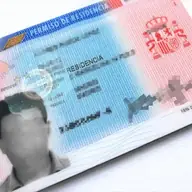 Residency in Spain 2026: Step-by-Step Guide for Foreigners
 How Do I Get My Social Security Number In Spain?
 What Is Empadronamiento?
 Lost Your Spanish TIE Or Residency Document? Here's What You Need To Do
Read next
Reviewed by Sean Guy, authorised Sanitas agent (agent code 22395) and DGSFP-registered insurance mediator (C0320X5769518Z), Marbella.
Written by the HealthPlan Spain team: English-speaking Sanitas health insurance specialists, helping expats in Spain get the right cover since 2011. Authorised and regulated by the DGSFP.