Car insurance in Spain is compulsory by law. Every vehicle with Spanish plates must have at least third party liability cover, the seguro obligatorio, and the owner must keep it in force even when the car is parked and never driven. The motor insurance law (Real Decreto Legislativo 8/2004, consolidated text updated 18 February 2026) sets the minimum cover at €70 million for injury and €15 million for property damage per accident, and the fine for an uninsured vehicle at €601 to €3,005, with the car impounded for a month. Most drivers choose one of three levels: third party (terceros), extended third party (terceros ampliado) or fully comprehensive (todo riesgo), with or without an excess. Every premium carries 8% insurance premium tax plus small Consorcio surcharges.
Living in Spain Cars, ITV and road tax
Car Insurance in Spain: How It Works for Foreign Residents

This guide was checked against the motor insurance law, the insurance contract law, the tax law and the publications of the Dirección General de Tráfico (DGT) and the Consorcio de Compensación de Seguros in November 2026.
Who must insure a car in Spain?
The owner. Article 2 of the motor insurance law obliges the owner of every vehicle normally based in Spain to take out and keep in force a policy for each vehicle. A vehicle is based in Spain when it carries Spanish plates, so the duty follows the registration, not the owner’s nationality. There is no exemption for a car left on the drive or in a garage: the only way out is to deregister it with the DGT, temporarily (baja temporal) or for good, after which it may not be used on the road at all. A UK registered car follows UK rules until you re register it: see driving and registering a UK car in Spain.
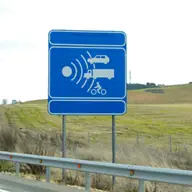
An uninsured vehicle is a breach of the insurance law itself, not a traffic offence. The fine is €601 to €3,005, graded by whether the car was moving, its type, the harm caused, how long it was uninsured and whether it has happened before. The car can be impounded or sealed at the owner’s expense for a month, three months on a repeat and a year if the seal is broken, and is released only once insurance is shown and the costs paid. Number plate cameras pick these cars up automatically: see how the ITV and insurance cameras work.
The three usual levels of cover
Third party (terceros)
The legal minimum and the cheapest. It pays for injury and damage you cause to others, up to €70 million for injury and €15 million for property per accident, and nothing towards your own car. Almost every Spanish policy bundles a few extras: the insurers’ association UNESPA reported in February 2026 that driver personal accident cover is on 94.6% of insured vehicles and legal defence on 87.6%.
Extended third party (terceros ampliado)
The same liability cover plus named risks to your own car, usually fire, theft and windscreen breakage (windscreen cover is on 77.8% of insured vehicles, UNESPA says). Roadside assistance is normally included. This is the usual choice for a car more than a few years old.
Fully comprehensive (todo riesgo), with or without an excess
Adds accidental damage to your own car, including an accident that is your fault. Only 39.9% of insured vehicles in Spain carry own damage cover. Con franquicia means you pay an agreed first part of each own damage claim in return for a lower premium; sin franquicia means the insurer pays the lot. The excess never applies to the liability part of the policy.
What decides the price
No official body publishes an average premium for a given driver or car, so we give no typical price. Every insurer weighs the same things: the driver’s age and years on the licence; the car’s make, age, value and whether it sleeps in a garage; the postcode where it is kept; private or work use and yearly mileage; the cover level and excess; and your claims history, because Spanish insurers run a bonus malus system that rewards a clean record and penalises claims.
Two charges sit on top of every quote whoever you buy from. Insurance premium tax (Impuesto sobre las Primas de Seguros) is 8% of the premium, the rate since 1 January 2021 under Ley 13/1996. The Consorcio de Compensación de Seguros, the public insurance body, adds 1.5% of the compulsory liability premium for its guarantee fund (resolution of 31 May 2016, in force since 1 July 2016), a fixed €2.10 a year per car for extraordinary risks such as floods (tariff from 1 January 2026), and 1.5 per thousand of the premium for winding up failed insurers. They show as separate lines on the receipt.
UK and other foreign licence holders
You can insure a Spanish registered car on a foreign licence; the licence itself is a separate question. An EU or EEA licence is valid in Spain as long as it is in force. A licence from any other country, the UK included, is valid for six months from the date you take up residence in Spain; after that you must exchange it or, where no agreement exists, pass the Spanish test. The UK and Spain have had an exchange agreement since 16 March 2023, so a UK licence is swapped without a test, provided a licence issued after that date was issued while you were legally resident in the UK. The steps are in how to exchange your driving licence in Spain. Insurers want the original issue date because years of experience lower the premium.
Bring your no claims record. No law makes a Spanish insurer accept it, but many will take a letter from your previous insurer stating your claim free years, so ask for it before you leave and send it with your application.
Driving abroad and the green card
A Spanish policy covers third party liability across the EU and EEA by law, so a trip to France or Portugal needs nothing extra. The DGT warns that it need not cover damage to your own car abroad, so read your terms before a long trip. The green card, now called the international insurance certificate, is not needed in the EU, the EEA, Switzerland, Andorra, Serbia, Bosnia and Herzegovina, Montenegro or the United Kingdom, according to OFESAUTO, the Spanish motor insurers’ bureau. It is still needed for Morocco, Turkey, Tunisia, Albania, Moldova, North Macedonia, Ukraine and a few others, and your insurer issues it; if it will not, you buy border insurance on arrival.
What to do after an accident
Follow the DGT’s three steps: protect, alert, help. Stop safely, hazard lights on, reflective vest on before you step out, triangles out. If anyone is hurt call 112, the free emergency number across the EU, and give the location, the vehicles and the number of injured.
With no injuries and both drivers agreed, fill in the declaración amistosa de accidente (DAA), the European accident statement your insurer must supply with the policy. Both drivers complete their side, tick the boxes, draw the sketch and sign, and each keeps a copy. If you disagree, do not sign: call the police and let them write a report. Photograph the scene and take witnesses’ details. You have seven days to notify your insurer, and the insurer then has three months from receiving a claim to make a reasoned offer or a reasoned refusal. Our step by step guide: how to deal with a road traffic accident in Spain. If the other vehicle is uninsured or drives off unidentified, the Consorcio acts as guarantee fund: it pays for injuries caused by an unknown vehicle, and for injuries and damage caused by an uninsured vehicle based in Spain.
How to check a car is insured: FIVA
Every insurer must report its motor policies to FIVA, the register of insured vehicles run by the Consorcio and shared with the DGT, which is why a Spanish registered car no longer has to carry its insurance papers: officers and cameras look the plate up. After an accident, anyone injured or whose property was damaged can ask the Consorcio which insurer covers the other car, by sending its form with a copy of the accident statement; it gives the insurer, never the other driver’s personal details. Your own car’s insurer and policy start date are shown in miDGT, the DGT’s private online area. What you must and need not carry is in proof of car insurance in Spain: must you carry it?.
Cancelling, switching and not paying
Spanish car policies run for a year and renew automatically. Under article 22 of the insurance contract law (Ley 50/1980) you stop the renewal by telling the insurer in writing at least one month before the policy year ends; the insurer needs two months to refuse your renewal and must give you two months’ notice of any change to the terms, including the price. Miss your one month window and you are normally tied in for another year, so diarise the date. Switching is otherwise simple: the new policy reaches FIVA the same day and your claims record goes with you. If a renewal premium goes unpaid, cover is suspended one month after the due date and the car is uninsured in law, so fix a failed direct debit at once.
Your health cover in Spain, in English
Pick up your Sanitas quote
HealthPlan Spain does not sell car insurance. We are an authorised Sanitas health insurance agent in Marbella, and our plans are accepted for Spanish residency and visa applications.
Your saved quote is ready whenever you are. Compare plans and finish in minutes.
Compare health plans My quotesQuestions people ask
Is car insurance compulsory in Spain? Yes. Every vehicle with Spanish plates must have at least third party liability insurance, and the owner must keep it in force even while the car is parked. The only exception is a vehicle deregistered with the DGT. The fine is €601 to €3,005 and the car can be impounded for a month.
Can I insure a car in Spain with a UK driving licence? Yes. Insurers accept a valid UK licence and count your years of driving towards the price. The licence itself is only valid for driving for six months after you become resident; after that it must be exchanged for a Spanish one, which has been possible without a test since 16 March 2023.
Can I use my UK no claims bonus in Spain? Sometimes. No law obliges a Spanish insurer to accept it, but many will consider a letter from your previous insurer confirming your claim free years. Get the letter before you leave and send it with your application.
What is the difference between terceros and todo riesgo? Terceros pays only for harm you cause to others and is the legal minimum. Terceros ampliado adds fire, theft and windscreen for your own car. Todo riesgo adds accidental damage to your own car, with a cheaper version where you pay an agreed excess on each own damage claim.
Do I need a green card to drive my Spanish car to the UK or France? No. The green card is not needed in the EU, the EEA, Switzerland, Andorra, Serbia, Bosnia and Herzegovina, Montenegro or the United Kingdom. You still need it for Morocco, Turkey and Tunisia, and your insurer issues it.
How do I cancel my car insurance in Spain? Tell the insurer in writing at least one month before the policy year ends. If you miss that date the policy renews for another year. The insurer must give you two months’ notice of any price or term change.
How much tax is on a car insurance premium in Spain? Insurance premium tax is 8% of the premium, the rate since 1 January 2021. On top come the Consorcio surcharges: 1.5% of the compulsory liability premium, €2.10 a year for extraordinary risks, and 1.5 per thousand for the insurer wind up fund.
Sources
BOE: motor liability and insurance law, articles 2, 3, 4, 7, 8 and 11 (in Spanish)
BOE: insurance contract law, articles 15, 16 and 22 (in Spanish)
BOE: insurance premium tax, Ley 13/1996 article 12 (in Spanish)
BOE: Consorcio surcharge on compulsory motor insurance (May 2016, in Spanish)
BOE: Consorcio extraordinary risks tariff (December 2025, in Spanish)
Consorcio de Compensación de Seguros: the FIVA register
DGT: driving on a foreign licence (in Spanish)
DGT: Spain and UK licence exchange agreement (March 2023, in Spanish)
DGT: what to do after a road accident (in Spanish)
DGT: driving abroad and the green card (in Spanish)
OFESAUTO: where the green card is still needed (in Spanish)
UNESPA: motor insurance claims and cover penetration (February 2026, in Spanish)
Frequently asked questions
Is car insurance compulsory in Spain?
Yes. Every vehicle with Spanish plates must have at least third party liability insurance (the seguro obligatorio), and the owner must keep it in force even while the car is parked. The only exception is a vehicle deregistered with the DGT. The fine for an uninsured vehicle is €601 to €3,005 and the car can be impounded for a month.
Can I insure a car in Spain with a UK driving licence?
Yes. Insurers accept a valid UK licence and count your years of driving towards the price. The licence itself is only valid for driving for six months after you become resident in Spain; after that it must be exchanged for a Spanish one, which has been possible without a test since 16 March 2023.
Can I use my UK no claims bonus in Spain?
Sometimes. No law obliges a Spanish insurer to accept a foreign no claims record, but many will consider a letter from your previous insurer confirming your claim free years. Get the letter before you leave and send it with your application.
What is the difference between terceros and todo riesgo?
Terceros pays only for harm you cause to other people and their property and is the legal minimum. Terceros ampliado adds fire, theft and windscreen cover for your own car. Todo riesgo adds accidental damage to your own car, with a cheaper version (con franquicia) where you pay an agreed excess on each own damage claim.
Do I need a green card to drive my Spanish car to the UK or France?
No. The green card is not needed in the EU, the EEA, Switzerland, Andorra, Serbia, Bosnia and Herzegovina, Montenegro or the United Kingdom. It is still needed for Morocco, Turkey and Tunisia among others, and your insurer issues it.
How do I cancel my car insurance in Spain?
Tell the insurer in writing at least one month before the policy year ends (article 22 of Ley 50/1980). If you miss that date the policy renews for another year. The insurer must give you two months’ notice of any price or term change.
How much tax is on a car insurance premium in Spain?
Insurance premium tax is 8% of the premium, the rate since 1 January 2021. On top come the Consorcio de Compensación de Seguros surcharges: 1.5% of the compulsory liability premium, €2.10 a year for extraordinary risks, and 1.5 per thousand of the premium for the insurer wind up fund.
More in Buying a car, ITV and road tax 17 guides
 Importing and Registering a Foreign Car in Spain: EU and UK Cars
 Car Road Tax IVTM In Spain - An Expat's Guide
 How To Change Ownership Of A Car In Spain
 ITV Test In Spain: Rules, Costs And What Happens If You Fail
 A Guide To Car Hire In Spain
Read next
Reviewed by Sean Guy, authorised Sanitas agent (agent code 22395) and DGSFP-registered insurance mediator (C0320X5769518Z), Marbella.
Written by the HealthPlan Spain team: English-speaking Sanitas health insurance specialists, helping expats in Spain get the right cover since 2011. Authorised and regulated by the DGSFP.