Getting started with Spanish car road tax
Car road tax in Spain is the IVTM (Impuesto sobre Vehículos de Tracción Mecánica), a yearly tax paid to the town hall where the vehicle is registered by whoever is named on its registration document on 1 January. For a car, the national minimum runs from €12.62 to €112 a year depending on its fiscal horsepower, and a town hall can charge up to double that, so the most a car can cost is €224 a year. Each town hall sets its own payment dates, in a window of at least two months, and most let you pay online, at a bank or by direct debit.
Do you drive a car, motorcycle or another vehicle in Spain and are unsure what you have to pay, when, and to whom?
Understanding the rules, regulations and other legalities to get your vehicle taxed in Spain can be daunting when you first move here. However, you don’t need to be concerned as we have created this simple guide that will give you all the information you need to know about IVTM car road tax in Spain.
You will find out about:-
- What IVTM car tax is
- How and where to pay your car tax in Spain
- The cost of car road tax in Spain
- When you have to pay your IVTM
- How to check whether a vehicle's road tax has been paid
- Spanish road tax calculators
- Suma car tax
- Documentation required to get your car taxed
- Second-hand cars and IVTM
- Fines for not having road tax
- And lots more.
Let’s get started and find out more.
They say that only two things in life are certain - death and taxes. Well, I’m afraid the same applies here in Spain, although having said that, Spanish road tax (IVTM as it is known locally) is relatively cheap compared to the UK and many other countries.
What is IVTM and why you need it
The legal meaning of IVTM
The initials IVTM stand for Impuesto Sobre Vehículos de Tracción Mecánica, which is the Spanish term for vehicle tax, or as you would say in the UK - Road Fund Licence. It amounts to the same thing.
It is a town hall tax, set out in articles 92 to 99 of Spain’s local finance law (Real Decreto Legislativo 2/2004). It is charged on every vehicle that is on the Spanish traffic register, whether or not you drive it.
If you own any sort of motor vehicle including a motorcycle and you’re going to be driving on Spanish roads, it is a compulsory tax. There is no tax disc and the traffic police do not check for it at the roadside, but an unpaid bill does not go away: the town hall adds a surcharge, can take the money straight from your bank account, and the traffic department (DGT) will not put the vehicle into a buyer’s name while the previous year’s tax is unpaid.
How much Spanish road tax costs
How IVTM is calculated
We’ve already indicated that the price of car tax here in Spain is cheaper than in the UK, but whereas in the UK the price is calculated on the engine size, age of vehicle and emissions etc, here in Spain it varies according to the type of vehicle, fiscal horsepower (potencia fiscal), and the town in which it is registered. Fiscal horsepower is not the engine’s real power: it is a figure worked out from the engine, and it is printed on the vehicle’s technical card (ficha técnica).
The law sets a national minimum for each type of vehicle, and each town hall may multiply it by a figure of up to 2. So the same car costs a different amount in different towns, but never less than the first column below and never more than the second. These are the amounts in the law as it stood in November 2026; they can only be changed by a national Budget law.
| Vehicle | National minimum a year | Most a town hall can charge (double) |
|---|---|---|
| Car under 8 fiscal horsepower | €12.62 | €25.24 |
| Car of 8 to 11.99 fiscal horsepower | €34.08 | €68.16 |
| Car of 12 to 15.99 fiscal horsepower | €71.94 | €143.88 |
| Car of 16 to 19.99 fiscal horsepower | €89.61 | €179.22 |
| Car of 20 fiscal horsepower or more | €112.00 | €224.00 |
| Moped, or motorcycle up to 125 cc | €4.42 | €8.84 |
| Motorcycle over 125 and up to 250 cc | €7.57 | €15.14 |
| Motorcycle over 250 and up to 500 cc | €15.15 | €30.30 |
| Motorcycle over 500 and up to 1,000 cc | €30.29 | €60.58 |
| Motorcycle over 1,000 cc | €60.58 | €121.16 |
Most family cars fall in the 8 to 11.99 or 12 to 15.99 bands. Pretty cheap compared to the UK!
IVTM is the yearly tax only. For the one-off taxes when you buy, see our guide to car taxes and deductions in Spain.
Note that a vehicle registered in the name of a person with a recognised disability of 33% or more, for that person’s own use, is exempt from IVTM. It covers one vehicle only and you have to apply to the town hall for it.
Spanish car road tax calculators
Online tools to estimate IVTM
There are two useful websites which can give you an estimate of the IVTM depending on the vehicle and where you live in Spain. The exact figure is always the one in your own town hall’s tax by-law (ordenanza fiscal) and on your bill.
Diesel y Gasolina - This is a great site with several tools including where to find your nearest ITV testing station, the cheapest petrol prices locally and a handy tool that tells you what your IVTM will be for any vehicle and region in Spain - Dieselogasolina: Calcular precio impuesto circulacion ivtm
If you are located in the Alicante province, you can get an estimate using this tool from the tax collection agency there, Suma. Suma: Cuerpo calc imp
You can find out more about Suma further below.
When car tax is due in Spain
Deadlines and late payment
There is no single national date. Each town hall, or the provincial office that collects for it, sets its own payment period every year, and it must last at least two months. Many fall in spring, but not all.
In 2026, for example, Madrid collected from 1 April to 1 June and Málaga city from 2 March to 6 May. The Málaga provincial collection office (Patronato de Recaudación Provincial) collected from 18 March to 20 May for the towns it acts for, and Suma from 5 March to 11 May for most of Alicante province. Alicante city was much later, from 1 September to 2 November. The dates move by a few days each year, so check your own town hall’s tax calendar (calendario fiscal or calendario del contribuyente) early in the year.
If you’re late with the payment, you can still pay but a surcharge is added (see the section on late payment below). The Spanish police do not check road tax at the roadside, but if the bill stays unpaid the town hall can take the money from your bank account.
You can pay your IVTM at your local town hall assuming that your car is registered in your local region or municipality. You can also pay at the bank. Once you are on the system and have paid IVTM, you just go along to the bank, and they will have the details on their computer system courtesy of your local authority. It’s the same for the Spanish equivalent of your council tax too.
When you have paid your tax, you will not be given a tax disc to display as you used to be in the UK (remember those?). You do not have to carry the receipt in the car, but keep it somewhere safe: you will be asked for the latest one when you sell the vehicle.
How to pay IVTM in Spain
In person at the town hall
All town halls allow you to pay your vehicle road tax in person. To do so you will need to present certain documentation when making a payment. See the required documentation section below.
Paying online
It is possible to pay your Spanish road tax online, however, this will depend on the region you are in and whether your town hall has an online facility.
The first place to check is your town hall’s website. Just Google for “fuengirola ayuntamiento”. Change ‘Fuengirola’ to your own town or city. You should then easily find your town hall’s website.
Alternatively, use the Ayuntamiento.es website.
Some banks may also provide you with an online facility to pay your road tax. Check with your own bank’s website to see if they do.
Tax collection agencies and banks
Many town halls hand the collection of road tax to a provincial office, and you then check and pay through that office instead of the town hall. Examples are Suma for most of Alicante province and the Patronato de Recaudación Provincial for the Málaga towns that use it. Big cities such as Madrid and Málaga collect their own through the city tax office. Your payment letter always shows who to pay.
To pay online you go to the online office (sede electrónica or oficina virtual) of whichever body sent the bill. With the payment letter in front of you, the reference on it and a bank card are normally enough. To look up a bill you have not received, you will usually need to sign in with a digital certificate or Cl@ve.
If you are in the Alicante region you can pay your road tax in person at your local Suma office. See more about Suma below.
You can pay your road tax at many of the high street banks in Spain. You can also set up a direct debit to pay it when it is due so you do not forget and incur any fines.
Road accidents are normally excluded
Pick up your Sanitas quote
Most health policies will not treat you if you are hurt on the road or at work. Top Quantum and Professional plans include it free.
Your saved quote is ready whenever you are. Compare plans and finish in minutes.
- Free on Top Quantum
- Free on Professional plans
Documentation required when paying IVTM
What you need to take with you
For the yearly bill, the payment letter is normally all the bank needs. If you go to the town hall (Ayuntamiento) without it, or you are paying for the first time for a newly registered vehicle, you will usually need to present a few items of documentation along with your payment. These are:-
- I.D (NIE or CIF)
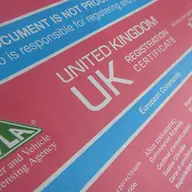
- The vehicle's registration document (Permiso de Circulacion)
- Technical Certificate (Certificado de Características Técnicas)
Suma car tax in Spain (Alicante province)
What Suma is and who it covers
Suma Gestión Tributaria or just ‘Suma’ is an autonomous body which was developed in 1990 by the Diputación Provincial de Alicante.
Suma is a public administration that manages and collects municipal taxes on behalf of the City Councils and other public administrations within the Alicante province.
Calculating and paying Suma road tax
Calculating your Suma road tax - If you are located in the Alicante province, you can use the Suma website to calculate your IVTM vehicle road tax here - Suma: Cuerpo calc imp
Paying your Suma road tax online - You can also pay your car’s Suma road tax and any fines online at the web address below.
Suma: Cuerpo tramites carta pago
Pay your Suma car tax via instalments - Suma allows you to pay your road tax via a flexible payment plan to help you manage the costs. See the following page in English for your options and to set it up.
Suma: Formas pago
Paying your Suma road tax at a local office - You can also pay your road tax at one of the 46 Suma offices in the Alicante region. See the following page from Suma with a full list of all the offices. Suma: Oficinas
Note that Suma only covers the Alicante province, and its road tax calendar does not apply to every town in it: in 2026 it left out Alicante city, Alcoi, Dénia and Xàbia, and Alicante city publishes its own payment period. If in doubt, your payment letter shows who to pay.
Buying a second-hand car and IVTM
Why you must check past road tax
The tax for each year is owed by whoever was the registered owner on 1 January of that year, so old road tax debts stay with the seller, not with you. The catch for a buyer is different: the traffic department (DGT) will not put the vehicle into your name while the previous year’s road tax is unpaid. So ask the seller for the latest paid receipt before you hand over any money. Our guide to changing the ownership of a car in Spain covers the transfer itself.
The tax is not split when a car is sold part-way through the year. The seller owes the whole of that year, and your first bill is for the following year.
If you’re buying a new car from a dealer, they will guide you through the process of applying for the first IVTM for that vehicle. If you are purchasing a second-hand car, it can be worth paying a small fee to a gestor who will check the vehicle documentation, any outstanding taxes and help you to register the vehicle. Our guide to buying a new or second-hand car in Spain lists the other checks to make.
For a vehicle registered in Spain for the first time, the first year’s tax is charged by calendar quarters, counting the quarter in which it is registered, and it has to be paid before the DGT will register the vehicle. That includes a car brought in from abroad: see our guide to importing and registering a foreign car in Spain.
In Spain, the registered vehicle owner on the 1st of January is the person who is liable to pay the road tax.
If you have not received an IVTM bill for your vehicle by the time your town hall’s payment period opens, it may be an indication that the registration of the vehicle is not right and may be worth checking.
How to check if car tax has been paid
Getting an official DGT vehicle report
How can I check if the car tax on a vehicle has been paid?
In Spain, you can get a vehicle report which in Spanish is called an Informe de Vehiculos.
You can get either a standard report or a detailed report.
The standard report is free and will tell you things like when the vehicle was first registered and whether there have been any incidents with the vehicle that may prevent it from being transferred to another owner.
The detailed report, which cost 8.67 euros when we checked the DGT website in November 2026, is more comprehensive and tells you who the owner is, where the vehicle is registered, mileage, ITV history and the number of owners. Town halls report unpaid road tax to the DGT’s vehicle register once their payment period has closed, and an unpaid bill for the previous year blocks a change of owner, so it should show up on the report as something that stops the transfer. It is still wise to ask the seller for the paid receipt.
You can visit the following official DGT web page for further information on vehicle reports.
Reports can be done either online via the link below.
Or in person at your nearest tráfico office using the official DGT vehicle forms (Modelo 01 – Solicitud General), available via the DGT vehicles portal:
Vehicles that are exempt from IVTM
Exemptions and discounts
Some vehicles are exempt from Spanish road tax by national law. These are official vehicles used for defence or public security, diplomatic and consular vehicles, ambulances, vehicles for people with reduced mobility, one vehicle registered to a person with a disability of 33% or more for their own use, city buses with more than nine seats, and farm tractors and machinery with an agricultural inspection card. Taxis and ordinary private cars are not exempt.
Old cars are not exempt automatically either. The law lets each town hall give a discount of up to 100% for historic vehicles, or for vehicles at least 25 years old, so it depends entirely on where the vehicle is registered and you normally have to apply for it.
Town halls may also give a discount of up to 75% according to the fuel a vehicle uses or the type of engine it has, which is how electric, hybrid and other low-emission vehicles get their reductions. Each town hall decides whether to offer it, the percentage and how many years it lasts, so look in your own town hall’s tax by-law.
Other driving costs: motorway tolls
Understanding Spanish toll roads
There’s one other thing that you should be aware of too, and that is that whereas in Britain Road Fund Licence is what it costs to drive on UK roads, in Spain, on many of the motorways (Autopistas) you also have to pay a small toll for the privilege of using the motorway.
Toll roads are normally designated by an “AP”. For example, the AP-7 on the Costa del Sol is just one example of a Spanish toll road.
Taking your vehicle off the road
When you don’t have to pay IVTM
My Vehicle Is Not Going to Be on the Road. Do I Still Pay IVTM?
Simply not using the vehicle, or keeping it in a garage, does not stop the tax: it is charged for as long as the vehicle is on the traffic register. If you have already been billed for the year, a voluntary temporary deregistration does not bring a refund either. The law only splits the year by calendar quarters in two cases: when the vehicle is scrapped or permanently deregistered (baja definitiva), and when it is temporarily deregistered because it has been stolen. In those cases you can ask the town hall to refund the quarters that are left.
To take a vehicle off the road formally you will need to apply for a baja temporal. This is the nearest equivalent to the SORN (Statutory Off Road Notice) in the U.K. Ask your town hall how it treats a vehicle that is in baja temporal on 1 January, because that is the date that decides the bill for the year.
For more details, see DGT’s page on altas, bajas y rehabilitaciones de vehículos.
Learn more about deregistering your vehicle in Spain.
Fines for late or non-payment
Penalties for unpaid IVTM
As mentioned previously, if you miss the payment period a surcharge is added. The amounts are fixed by Spain’s general tax law (Ley General Tributaria, article 28). It is 5% if you pay the whole bill before the town hall sends you a formal demand (providencia de apremio).
Once that demand arrives, the surcharge is 10% if you pay within the deadline it gives you, and 20% plus interest after that. From there the town hall can take the debt from your bank account.
FAQ – road tax in Spain
Common questions about IVTM
Q. When is car tax due in Spain?
A. There is no single national date. Each town hall sets its own payment period of at least two months every year, often in spring: in 2026 Madrid collected from 1 April to 1 June and Málaga city from 2 March to 6 May. Check your own town hall’s tax calendar.
Q. How much does road tax cost in Spain?
A. Road tax (IVTM) for a car in Spain costs between €12.62 and €224 a year. The national minimum runs from €12.62 to €112 depending on the car’s fiscal horsepower, and each town hall can charge up to double that. Use the road tax calculators on this page to get an idea of the cost in your town.
Q. How do I pay my car tax in Spain?
A. There are different ways to pay. You can pay in-person at your town hall, at your bank and depending on where you live, you may be able to pay online with your town hall or bank. If in the Alicante region you can pay online or in-person at the Suma offices.
Q. Is there car tax in Spain?
A. Yes. It is called IVTM and the owner of every vehicle registered in Spain pays it to the town hall each year. A vehicle registered to a person with a disability of 33% or more for their own use is exempt, and town halls may give discounts of up to 100% for historic vehicles or those at least 25 years old.
Q. Can I pay my Spanish car tax online?
A. Yes, in most places. You pay IVTM on the website of the town hall or the provincial collection office that sent the bill, for example Suma in most of Alicante province, using the reference on the payment letter and a bank card. Many banks also take the payment online.
Q. Can I pay my road tax monthly in Spain?
A. Some provinces allow you to do this including Suma in the Alicante province. Suma offers a flexible payment plan to help you manage the costs. See the following page for full details Suma: Formas pago
Q. What happens if I don’t pay my road tax in Spain?
A. A surcharge is added to an unpaid IVTM bill: 5% if you pay before the town hall sends a formal demand, 10% if you pay within the deadline in that demand, and 20% plus interest after that. The town hall can then take the debt from your bank account, and the vehicle cannot be transferred to a buyer while the previous year’s tax is unpaid.
If you found this article of interest, please share it with your friends via the social media buttons.
Protect yourself on the road
Private health cover with traffic accident protection
If you drive regularly in Spain, it’s worth having private health insurance that also covers you in case of a traffic accident. Our Sanitas Top Quantum plan includes full traffic accident cover at no extra cost — ideal for expats who spend a lot of time behind the wheel.
Peace of mind. Premium cover. No co-pays.