To ride a motorcycle in Spain you need the right category of licence, plus a helmet, insurance and your documents. Spain uses the standard European licence ladder – AM for mopeds, A1 for light motorcycles, A2 mid-range and A for everything. If you hold a Spanish or EU car (B) licence for at least three years you can also ride a 125cc motorcycle within Spain.
Living in Spain Licence and road rules
Riding a Motorcycle in Spain: Rules, Licences, Safety Laws and Fines
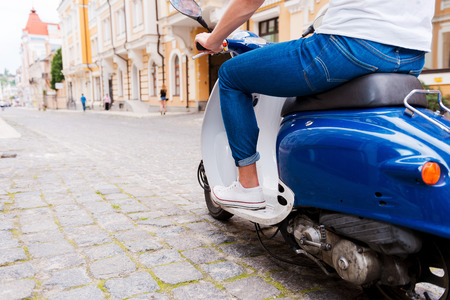
Riding a motorcycle in Spain can be brilliant. The roads can be spectacular, the climate makes two-wheel travel practical for much of the year, and a bike is often the easiest way to get through busy towns or coastal traffic. That said, Spain is not a country where you can rely on hearsay or old forum posts. Motorcycle rules are enforced, fines can be painful, and some of the measures that were widely reported in recent years were proposals rather than nationwide rules already in force.
This guide explains what licence you need, what equipment is actually mandatory, what paperwork you must keep in order, how speed limits work, and which mistakes most often land riders in trouble. It is written for expats, residents, visitors with a Spanish-registered bike, and anyone trying to work out what the law really says before riding in Spain.
Which licence you need to ride in Spain
Spain uses the standard motorcycle licence ladder. The AM licence is for mopeds. The A1 licence covers light motorcycles up to 125cc, up to 11 kW, and with a power-to-weight ratio of no more than 0.1 kW per kilogram. The A2 licence covers motorcycles up to 35 kW with a power-to-weight ratio of no more than 0.2 kW per kilogram, and the bike must not be derived from a machine with more than double that power. The A licence removes the power limit, but you can only obtain it after holding A2 for at least two years.
The age thresholds matter too. AM starts at 15, A1 at 16, A2 at 18, and A at 20, provided the rider already has the necessary A2 experience. For many expats, the most useful rule is this one: if you hold a Spanish class B driving licence and have held it for more than three years, you can ride motorcycles in the A1 category within Spain. In plain English, that means many 125cc bikes can be ridden legally without a separate A1 test, but only inside Spanish territory.
If you are moving up from A2 to A, be aware that the Class A training rules were updated in 2025. The course now has a minimum duration of nine hours over at least two days, and the protective gear requirements during training are stricter than many riders expect, including approved gloves, motorcycle jacket and trousers, protective boots and an approved airbag garment for the practical elements.
For the official breakdown of motorcycle licence categories and requirements, see the DGT driving licence procedures page.
AMfrom 15
Mopeds
A1from 16
Up to 125cc / 11 kW
(max 0.1 kW/kg)
A2from 18
Up to 35 kW
(max 0.2 kW/kg)
Afrom 20
No power limit – needs A2 held for 2+ years
Expat shortcut: a Spanish class B car licence held for 3+ years lets you ride A1-category (125cc) bikes within Spain, no separate test.
Can you ride in Spain with a foreign motorcycle licence?
If you are moving to Spain or spending long periods here, do not assume your home licence will always remain valid indefinitely. The answer depends on where your licence was issued and whether you are resident in Spain.
If you hold a licence issued by an EU or EEA country, you can normally continue riding in Spain while that licence remains valid. In many cases, exchanging it for a Spanish one is voluntary rather than compulsory, although some riders still choose to do so for practical reasons once they become resident.
If your licence was issued outside the EU or EEA, the rules can be very different. Spain has exchange agreements with some non-EU countries, and where an exchange agreement exists, the categories you already hold can often be transferred to a Spanish licence. For A and B categories, the exchange is generally direct without extra practical tests, provided the licence meets the agreement conditions.
The important detail is timing. Once you become resident in Spain, a non-EU licence is not something you should assume will remain valid indefinitely. That is why anyone relocating permanently should check their position early instead of waiting until the licence issue becomes a legal problem.
Can you ride a 125cc motorcycle with a car licence in Spain?
This is one of the most common questions among expats and new residents. In Spain, the answer is often yes, but only under specific conditions. If you hold a Spanish class B car licence and have held it for at least three years, DGT allows you to ride motorcycles in the A1 category within Spain.
That means you may legally ride a 125cc motorcycle or scooter as long as it falls within the A1 limits. In general terms, that covers motorcycles up to 125cc, up to 11 kW, and within the permitted power-to-weight ratio. This is one reason 125cc scooters and commuter bikes are so popular across Spain.
However, riders should be careful not to stretch this rule beyond what it actually says. It does not give you wider motorcycle rights beyond the A1 category, and it should not be treated as a blanket shortcut into larger or more powerful bikes. If the motorcycle exceeds the A1 limits, you move into a different licence category and the rules change immediately.
What is actually mandatory on the road
The one rule that is absolutely clear nationwide is the helmet rule. Riders and passengers on motorcycles, mopeds and similar vehicles must use an approved or certified protective helmet on both urban and interurban roads. Wearing no helmet, wearing it incorrectly, or using gear that does not meet the legal standard is exactly the sort of shortcut that ends in a fine and points off your licence.
It is also important not to confuse legal minimums with sensible riding practice. Spain has talked repeatedly about tighter equipment rules for motorcyclists, and a lot of articles blurred the line between announced plans and live law. As things stand, it is wise to ride with proper gloves, protective jacket, sturdy trousers and boots, but the safest way to describe the current nationwide position is that the approved helmet is clearly mandatory, while tougher glove and helmet-type proposals were reported as road safety measures rather than consolidated nationwide everyday road rules already in force for all riders.
Closed, protective footwear remains the only sensible choice even when the weather is trying to convince people otherwise. Riding in sandals, beach shoes or anything likely to come off in a fall is asking for trouble, whether the Guardia Civil notices first or the tarmac does.
The hard shoulder issue that causes confusion
One of the biggest areas of confusion is the hard shoulder in traffic jams. You may have seen claims that motorcycles can now legally use the right-hand shoulder at up to 30 km/h whenever traffic is slow or stationary. That proposal was widely reported and discussed by DGT, but riders should not treat it as a blanket nationwide green light in everyday riding.
Unless there is a specific authorised arrangement in place, temporary traffic management, or clearly signposted local measure, assume normal lane discipline applies. Using the shoulder casually because traffic is slow is exactly the sort of move that can end in a fine, a roadside argument, or something worse.
Passengers and children on motorcycles
You can carry a passenger only if the motorcycle or moped is authorised for it in the registration or circulation documents and the bike has a proper passenger seat and footrests. The passenger must ride astride the motorcycle, keep both feet on the side footrests, and wear an approved helmet.
As a general rule, the passenger must be at least 12 years old. There is a narrow exception for children over seven when the rider is the child’s parent, guardian, or another adult specifically authorised by them. This is one of those rules where close enough is not close enough. If the age or relationship does not fit the legal rule, the ride is not lawful.
Road accidents are normally excluded
Pick up your Sanitas quote
Most health policies will not treat you if you are hurt on the road or at work. Top Quantum and Professional plans include it free.
Your saved quote is ready whenever you are. Compare plans and finish in minutes.
- Free on Top Quantum
- Free on Professional plans
Documents you should have in order
When riding in Spain, keep your paperwork clean and current. DGT’s standard document set is your valid driving licence, the vehicle’s circulation permit and the ITV card or technical inspection card. These can now be handled digitally in many situations through DGT systems, but you still need to be able to produce valid documentation when required.
The old habit of treating proof of insurance as a separate everyday paper document is less central than it used to be because the authorities can verify insurance electronically. That does not mean insurance is optional. Every motorcycle or moped using the road must have compulsory third-party insurance in force, and riding uninsured is one of the more expensive ways to ruin an otherwise nice morning.
If you need a refresher on inspections, our ITV guide for Spain is still useful. For road tax, see our guide to road tax in Spain.
Low Emission Zones and city restrictions for motorcycles
Motorcycle riders also need to be aware that urban access rules are no longer only about parking signs and one-way streets. Spain now has Low Emission Zones, known as ZBE zones, in many urban areas. These are areas with specific access restrictions designed to reduce pollution, and they are compulsory in municipalities with more than 50,000 inhabitants, although smaller towns and cities may also introduce them.
In practice, that means a motorcycle that is perfectly legal to ride on the open road may still face restrictions when entering certain city areas. The rules can vary from one municipality to another, so riders should not assume the same conditions apply everywhere. If you regularly ride into larger towns or cities, especially places with heavy traffic or environmental controls, it is worth checking the local rules before you set off.
This matters even more for older motorcycles, imported bikes, and riders who are unfamiliar with Spanish urban signage. A fine for entering a restricted zone is an irritating way to end what was supposed to be a quick ride into town.
Motorcycle speed limits in Spain
Motorcycles broadly follow the same general speed limits as cars, but riders often get caught out because the urban rules are no longer a simple one-size-fits-all 50 km/h. On urban roads with a single lane in each direction, the general limit is 30 km/h. On roads with a shared platform for vehicles and pedestrians, the general limit is 20 km/h. On roads with two or more lanes in each direction, the general urban limit is 50 km/h unless signs say otherwise.
Outside built-up areas, the general maximum on conventional roads is 90 km/h, and on motorways and dual carriageways it is 120 km/h for motorcycles. Mopeds are in a different category altogether. Their maximum authorised speed is 45 km/h, and they are not allowed on motorways or major roads where that restriction applies.
Another point many riders still get wrong is overtaking speed. Spain removed the old rule that let cars and motorcycles exceed the posted limit by 20 km/h on conventional roads while overtaking. That extra margin is gone. If the road says 90, then 90 is the limit, even during an overtake.
Lighting and visibility rules
Motorcycles in Spain must ride with dipped headlights on during the day. This is not just a recommendation. It is a regulatory requirement. A surprising number of riders still assume daytime lights are optional because they are used to rules in other countries, but Spain expects bikes to be visible at all times.
Beyond the legal minimum, visibility matters massively on Spanish roads, especially on bright days when drivers can misjudge closing speed and on coastal or mountain roads where shadows and glare change fast. A high-visibility or reflective vest is not generally treated as mandatory motorcycle equipment in the same way it is for many car breakdown situations, but carrying one remains a smart move in case of a roadside stop, mechanical issue or crash scene.
Intercoms, headphones and mobile phones
This is another area people muddle constantly. Spain prohibits riding while using headphones or earphones connected to sound devices. That means the classic earbud-in-one-ear routine is still a bad idea legally as well as practically. The rule is built around keeping the rider’s hearing and attention available for the road.
At the same time, the law allows hands-free communication systems as long as they do not require the rider to use prohibited headphones or take their attention off the road. In other words, a proper motorcycle intercom fitted and used correctly is one thing; riding along with earbuds in and your brain half in a podcast is quite another.
As for mobile phones, the safest rule is brutally simple: keep your hands off them. Holding a mobile while riding is heavily sanctioned. If you need navigation, set it before you move off and use an approved mount without touching it during the ride unless you are properly stopped.
ITV, tax and insurance basics
Motorcycles do not need an ITV immediately after first registration, but that grace period does not last forever. In Spain, motorcycles are exempt until they are more than four years old and then usually require inspection every two years. Two-wheel mopeds are exempt until they are more than three years old and then also move to a two-year inspection cycle.
Motorcycles also pay annual IVTM, the local circulation tax, through the municipality where the vehicle has its fiscal address. The amount varies by council, so two similar bikes in different towns may not pay exactly the same figure. The tax is the owner’s responsibility, not something to shrug at and hope disappears into administrative fog.
Compulsory insurance is non-negotiable. Third-party liability cover is the minimum legal requirement. More comprehensive cover may make sense depending on the value of the bike, where you park it, and how often you ride. What you should not do is assume that because a bike is used rarely, stored privately, or only taken out seasonally, the rules become relaxed.
Common fines and mistakes that catch riders out
One of the most common and costly mistakes is treating safety rules as optional on short trips. Not wearing an approved helmet, or not wearing it properly, is punished with a fine and licence points. Holding a mobile phone while riding is another expensive classic. Riding without valid insurance can trigger a far bigger sanction and potentially immobilisation. Riding with an expired ITV can also lead to fines, and the amount rises if the inspection status is worse than merely overdue.
Paperwork errors matter too. An expired licence, missing circulation permit, or out-of-date vehicle documents may seem administrative, but in Spain they are not shrugged off with a polite warning nearly as often as riders hope. The authorities expect the bike, the rider and the paperwork to line up neatly.
Noise and non-homologated modifications can also attract attention. Spain is not especially forgiving about illegal exhausts, missing silencers or other changes that affect the bike’s legal compliance. If the modification makes the machine noisier, more visible in the wrong way, or less roadworthy, it is the sort of thing that can invite inspection very quickly.
Practical safety advice for riding in Spain
The law is one thing. Survival is another. Spanish roads vary wildly. A smooth dual carriageway can turn into a patched mountain road in no time, and heat, diesel spills, loose gravel, painted urban markings and tourist traffic all create their own hazards. Roundabouts can be messy, lane discipline in busy towns can be creative in the worst possible sense, and summer roads often mix confident locals with nervous hire-car drivers.
Ride defensively, especially near junctions, fuel stations, coastal access roads and town entrances. Watch for polished road paint in the heat, farm debris inland, and sea moisture on early-morning roads near the coast. On twisty roads, do not assume the oncoming lane will stay empty just because it looked empty three seconds earlier. Spain produces some glorious riding roads, but it also produces some heroic overtaking decisions from other people.
Good kit, correct documents, a legal exhaust, current ITV, active insurance and a realistic view of your own visibility will do more for you than any amount of optimistic bravado. The bike may be the freedom machine. The paperwork is the part that keeps the freedom machine from being loaded onto a tow truck.
Sources
- DGT official motorcycle guidance in Spain
- DGT official driving licence procedures in Spain
- DGT guidance on driving in Spain with a foreign licence
- DGT guidance on exchanging non-EU driving licences in Spain
- DGT guidance on EU and EEA licence exchanges in Spain
- DGT guidance on documents you must carry in your vehicle
- DGT guidance on city driving and Low Emission Zones in Spain
- DGT guidance on Spanish circulation tax IVTM
- BOE consolidated Spanish General Circulation Regulation
- BOE regulation on ITV inspection intervals in Spain
Frequently asked questions
Do you need a licence to ride a motorbike in Spain?
Yes. You need the appropriate motorcycle category (AM for mopeds, A1, A2 or A) for the bike you are riding. Riding without the correct licence carries a heavy fine and invalidates your insurance.
Can I ride a 125cc on a car licence in Spain?
If you hold a Spanish or EU category B (car) licence for at least three years, you can ride a 125cc motorcycle within Spain. A UK car licence does not give this right after Brexit, so UK visitors need an A1 licence.
Can I ride a motorcycle on a full driving licence?
The A licence covers all motorcycles. A standard car (B) licence on its own does not let you ride a motorcycle, apart from the three-year 125cc rule above, so for larger bikes you need the relevant A category.
What do you need to ride a motorcycle in Spain?
You need a valid licence for the bike, a fastened helmet (compulsory for rider and passenger), valid insurance and the bike’s registration documents. Visitors riding a non-EU licence should also carry an International Driving Permit.
More in Driving licences and road rules 38 guides and 1 article
 What’s The Drink Drive Limit In Spain? UK Comparison, Fines And BAC Levels
 Requirements For Americans Driving In Spain
 DGT Test in English: How to Practise and Pass in Spain
 The Three Documents You Must Carry In Your Car To Avoid A 100 Euro Fine
 Driving And Registering A UK Car In Spain
Read next
Reviewed by Sean Guy, authorised Sanitas agent (agent code 22395) and DGSFP-registered insurance mediator (C0320X5769518Z), Marbella.
Written by the HealthPlan Spain team: English-speaking Sanitas health insurance specialists, helping expats in Spain get the right cover since 2011. Authorised and regulated by the DGSFP.