To secure a property in Spain, follow the advice the police give: lock the door with the key every time you go out, fit a solid door and a good lock, make the home look lived in while you are away, ask someone you trust to check it, and think about an alarm. This guide follows the published home security advice of Spain’s two national police forces, the Policía Nacional and the Guardia Civil, and the laws on alarms and home insurance. It was checked against them in November 2026.
Living in Spain Police and paperwork
How To Secure Your Property In Spain
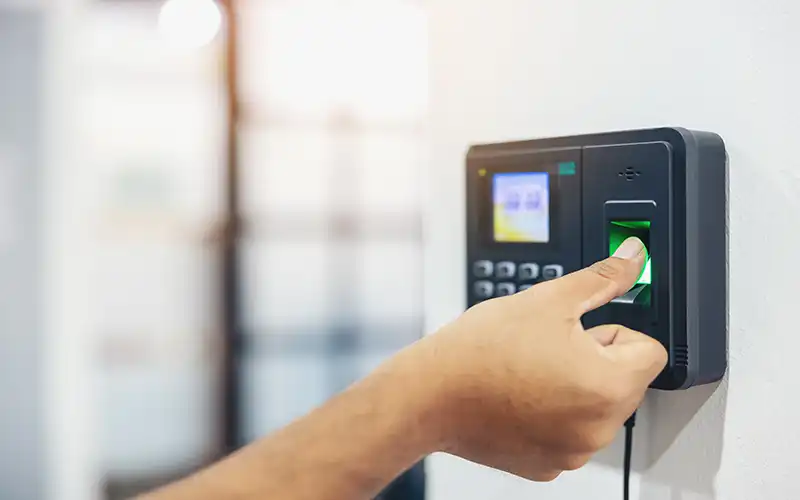
Burglary is the main risk, and the official figures show it falling. Spain’s police forces recorded 33,745 burglaries of homes between January and June 2026, which is 3.7 per cent fewer than in the same six months of the year before, according to the Interior Ministry’s crime figures. Squatters (“okupas”) are a separate worry for owners whose homes stand empty for part of the year.
1. Choose the Right Location and Stay Aware of Seasonal Risks
A home that stands empty for weeks at a time, such as a holiday home out of season, needs the most thought. The police advice for absences is simple:
- Do not leave the shutters fully closed. The Guardia Civil calls this an obvious sign that nobody is home.
- Ask a neighbour or someone you trust to empty the letterbox, look over the property and switch a light on now and then.
- Set lights, a television or a radio to come on and go off by themselves.
- Do not switch the electricity off completely. A doorbell that does not ring is a sign that the home is empty.
- Take money and valuables to a safe place instead of leaving them in the house.
- Do not announce your holiday on social media before or during it, do not tell strangers how long you will be away, and do not leave a message about it on an answering machine.
- Leave a contact number with the person who is checking the home, so that you can be reached in an emergency.
2. Understand Spain’s Squatter (“Okupa”) Problem
Occupying someone else’s property without permission is a crime in Spain, and it mostly worries owners whose homes stand empty for part of the year. What the law says, how to keep squatters out and what to do if your home is occupied are explained in our separate guide to squatters (okupas) in Spain.
3. Apartment Security: Not as Safe as You Think
Living several floors up does not replace the basics, and in a building your security also depends on your neighbours. The Guardia Civil’s advice for flats is:
- Do not open the street door through the entry phone to people you do not know. It puts your neighbours at risk as well as you.
- In a shared garage with a door on a timer, wait until the door has closed behind you so that nobody slips in.
- Do not leave valuable things on an open terrace or balcony.
- Do not sleep with the windows open unless they have some form of security.
- People selling at the door and workers from the water, electricity or gas company must identify themselves, and you can check by telephoning the company.
The Policía Nacional adds that you should be wary of inspectors and technicians who arrive without an appointment and, if in doubt, not let them in. Both forces ask you to tell the police if you see marks on doors or entrances, objects wedged between a door and its frame or pushed into a lock, or people or vehicles hanging around that you do not recognise.
4. Villa and Finca Security: Remote Living, Real Risks
For a house outside a town or village, the Guardia Civil names two useful deterrents: good outside lighting and a properly trained dog. It also suggests thinking about an electronic alarm.
If you want an alarm that is connected to a monitoring centre, the Private Security Law (Ley 5/2014 de Seguridad Privada) sets the rules:
- Only an authorised private security company may install and maintain a security system that is connected to an alarm receiving centre, and only such a company may run the centre.
- The centre receives the alarm signal, verifies it and, where appropriate, passes it to the police.
- Connected systems must have preventive checks at set intervals, so ask what maintenance the contract includes.
- The customer has duties too. Knowingly hiring a company that is not authorised is a very serious infringement, with a fine of €20,001 to €100,000. Using alarm devices that are not approved is a serious one, with a fine of €3,001 to €20,000. A security system that does not work as it should is a minor one, which brings a warning or a fine of €300 to €3,000.
Read the contract before you sign it, and ask the company to show you that it is authorised.
Private cover in Spain
Pick up your Sanitas quote
See a doctor or specialist privately instead of waiting your turn. Sanitas plans from €22,10 a month.
Your saved quote is ready whenever you are. Compare plans and finish in minutes.
Get a price My quotes5. The Classic “Rejas” Still Work — But Check Safety Rules
Window and door grilles (“rejas”) are a familiar sight on Spanish homes, above all on ground floors. The police advice we checked does not go into grilles, but it does say not to sleep with windows open unless they are protected, and the Policía Nacional recommends bolts for sliding windows as a small investment.
Two practical points before you fit them. Think about how you would get out in a fire before you bar every window. And in a building or urbanisation, speak to the community of owners first: under article 7 of the Horizontal Property Law (Ley de Propiedad Horizontal), an owner may not carry out work that changes the outside appearance of the building, and must tell the community’s representative beforehand about work on his or her own property.
6. Home Security Cameras and Legal Compliance
Home security cameras are legal in Spain. An outdoor camera may film only your own property plus the minimum strip at your entrance, and it needs an information sign. The full rules are in our guide to home security cameras in Spain.
7. Smart Technology and Remote Monitoring
Some of the Policía Nacional’s own suggestions are electronic. Its home security leaflet lists an electronic bolt and an electronic peephole among the small investments that can make a home safer, and it advises setting lights, a television or a radio to switch on and off automatically while you are away.
Remote monitoring, where a control centre receives the signal from your alarm, is the service described in section 4, and only an authorised private security company may provide it. Whatever you fit, the police advice is to use it every time: lock up and switch the alarm on even when you go out for a few minutes.
8. Locks, Doors, and Physical Barriers
The door is where the police advice starts:
- Always lock with the key. A door that is only pulled shut on the latch is easy to open.
- Fit an armoured door (puerta blindada) if you can. If not, the door should lock at two points at least, with no gap between the door and the floor.
- Reinforce the hinge side with steel pins and metal angles so that the door cannot be levered open.
- Change the lock cylinder when you buy a home from another owner, when the home is newly built and several people have had the keys, and when someone who had the keys stops working for you. The Policía Nacional recommends a cylinder with a quality certificate.
- Fit a wide-angle peephole.
- Never hide keys in the letterbox, a plant pot or the meter cupboard. Thieves find them easily.
9. Insurance and Documentation
The Guardia Civil advises taking out insurance, especially if you keep valuable things at home. It also advises writing down the serial numbers of appliances, cameras and similar equipment, and photographing jewellery and other valuables. Keep the invoices too: they are what you will show the police and the insurer.
What a policy covers depends on its own terms, so read them. The Insurance Contract Law (Ley 50/1980 de Contrato de Seguro) sets some rules that are the same for every policy:
- Before the contract is made, you must tell the insurer, in answer to its questionnaire, about the circumstances you know of that affect the risk (article 10).
- You must tell the insurer about a theft within seven days of learning of it, unless the policy gives you longer (article 16).
- Within five days of that notice you must send the insurer a written list of the objects that were in the home, the ones that were saved and an estimate of the damage (article 38).
- Unless the policy says otherwise, a theft is not covered if it happened through serious negligence by you or by people who depend on you, or if the object was taken from somewhere other than the place described in the policy (article 52).
10. When Prevention Fails: Reporting a Burglary
If you come home to an open door or a broken window, do not go in and do not touch anything: call the police. Then report it by making a police report (denuncia), take the invoices or photographs of what was stolen with you, and ask for proof that you made the report. The steps are in our article on how to report a burglary or theft in Spain.
Final Thoughts
No home is completely burglar-proof. The police advice comes down to a few habits: lock up with the key every time, do not advertise that you are away, keep a good lock on a solid door, ask a neighbour to keep an eye on the place and tell the police about anything odd.
Protect Your Home and Health in Spain
Your home deserves protection — and so does your wellbeing. Whether you live in Spain full-time or part-time, reliable health cover gives you security and peace of mind for life’s unexpected moments. Discover flexible, affordable options designed for expats today.
More in Police, scams and official paperwork 17 guides and 1 article
 How To Identify An Unmarked Spanish Police Car
 How To Apply For A Criminal Record Certificate In Spain
 How To Report A Burglary Or Theft In Spain
 How To Obtain A Cl@ve PIN For Secure Online Services In Spain
 CCTV in Spain: Are Home Security Cameras Legal?
Read next


Reviewed by Sean Guy, authorised Sanitas agent (agent code 22395) and DGSFP-registered insurance mediator (C0320X5769518Z), Marbella.
Written by the HealthPlan Spain team: English-speaking Sanitas health insurance specialists, helping expats in Spain get the right cover since 2011. Authorised and regulated by the DGSFP.